13 October 2026
Walkers to Fetchers
A defining feature of Impressions/Sierra city builders is the walker economy. Basically, service buildings send out people ("walkers") and houses they cross get the benefit of the service. It was a decent way of getting movement into the games, but not without challenges. Planning and guiding walkers could get quite exhausting, and results were sometimes unpredictable.
As I worked on Indus, I found myself slowly drifting towards the opposite - "fetchers" instead of "walkers". Which is also closer to real life. So, when a house needs water, someone goes out and gets it - from the river, or a lake, or a well. When it needs food, someone goes and gets it. And so on.
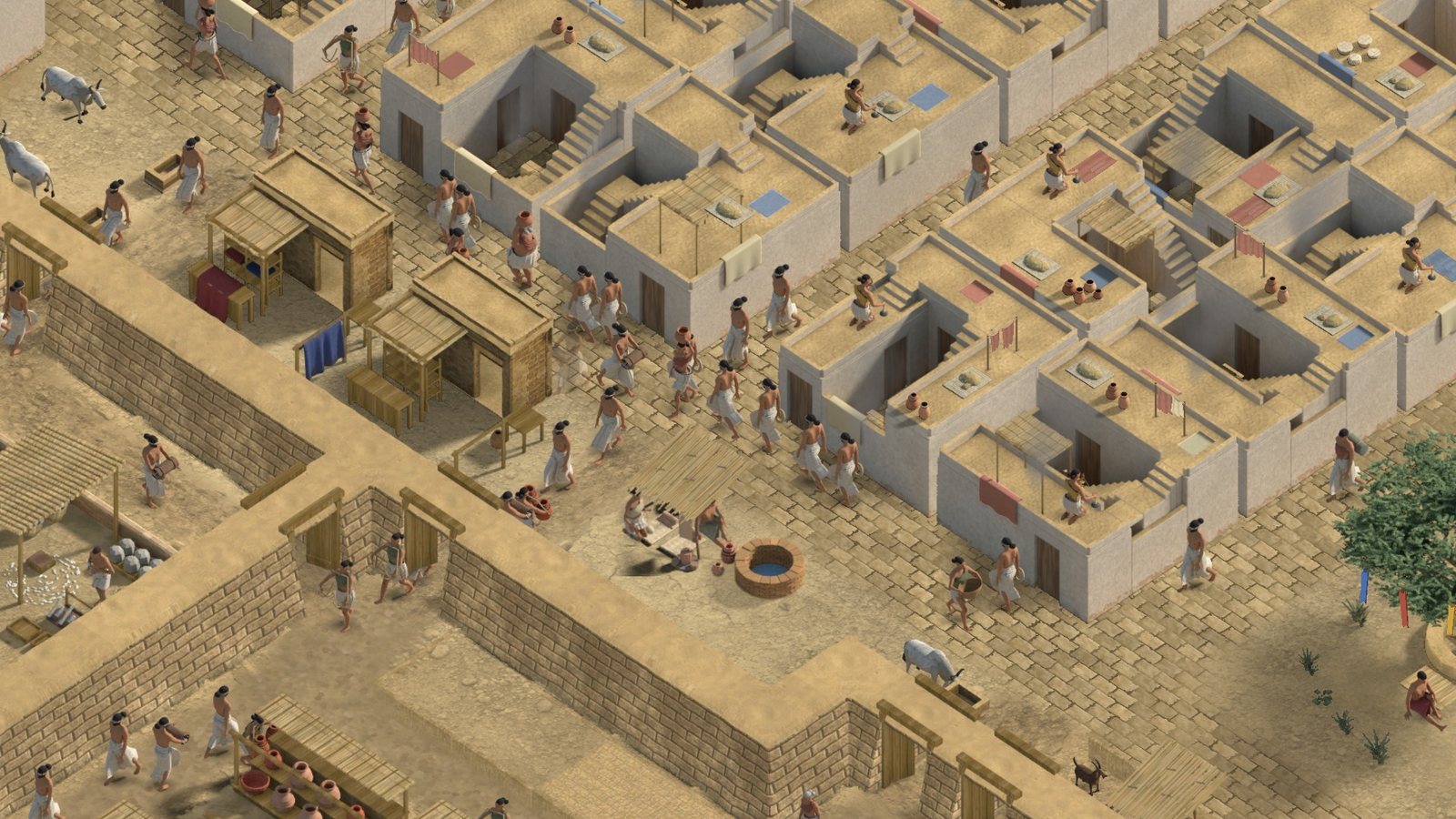
The result has been effective for the gameplay. The cities get even livelier with a lot more people out and about fetching products. But, it also takes a bigger toll on the system. There are a lot more calculations to perform for each fetcher. Walkers had a definite route and each house they 'intersected' got the benefit. Fetchers mean every house needs to individually calculate where to get its goods from and plan the route for every trip. I do wonder if that was a reason why walkers were implemented in the first place all those years ago.
Anyways, Fetchers are here to stay. They simply feel more real and fit the game design better. It definitely has led to a lot more time spent optimizing the game, especially at 3x speed, but fortunately so far it's been working well. Further playtesting with older computers may need additional changes, but hopefully minimal compromises.
But, for the cities this means a lot more life. Main streets get crowded. You're encouraged to build wider streets to better support your people - which is exactly how these cities grew. It makes the whole experience a lot more rewarding and lively.